
Microsoft Word Hyperlink Pdf Mac
What is a hyperlink?
- Microsoft Word Hyperlink Pdf Mac Download
- Microsoft Word Hyperlink Pdf Mac Software
- Microsoft Word Hyperlink To Folder
Word for Mac crashes and slow performance. Word does not respond when using 'Save as Picture' WordRake add-in causing Word for Mac to crash since upgrading to Catalina (OSX 15.0) Problems launching Word for Mac 2016 (Version 16.11) FIXED Issues affecting Word for Mac features and add-ins WORKAROUND Word document save as a PDF to an online.
- Jun 14, 2019 To add a hyperlink to a word or picture in your document. Select the word or picture you want to add a hyperlink to. Open the Insert tab (or Insert drop-down if you are using an older version of Word). Click on the Hyperlinks button (or choose Links Hyperlink if you have an older version of Word).
- Dec 02, 2019 Another option you can try to get hyperlinks to appear in a pdf: create your document in Microsoft Word 2011 for Mac. Then insert a blank line right above the text where you want the hyperlink to appear. Copy and paste the full link onto this line. Reduce the font size so that it just fits above your text.
A hyperlink is defined as “an icon, graphic, or word in a file that, when clicked on with the mouse, automatically opens another file for viewing.”
If you were around (and paying attention) back when the World Wide Web was in its infancy, you heard a lot about the exciting possibilities of “hypertext,” which is the basis for the Web. When you surf the Web with your Web browser, the “http” that begins the URL displayed in your browser’s address bar or status bar stands for “Hypertext Transfer Protocol,” and HTML, the language used for Web pages, is “Hypertext Markup Language.”
The whole idea of hypertext is that you don’t have to read it linearly, like a book. It contains “hyperlinks” that, when clicked, instantly transport you somewhere else—another point in the same document or Web page or another document or Web page. This is rather like turning from your current page in a book to the notes or index at the back of the book, or finding a page number in a table of contents and turning to that page, or finding a reference to another book and going and getting that book, except that the process is automated and instant.
Although hyperlinks were originally created for use on the Web, they have become increasingly common in Word documents, especially those intended to be read onscreen. When you insert a table of contents (TOC) in Word 2000 or above, by default the TOC entries are hyperlinked to the corresponding headings in the text. In any version of Word the page numbers in a TOC are hyperlinked to the corresponding pages. Cross-references are also, by default, inserted as hyperlinks.
How to create a hyperlink
In Word a hyperlink consists of (at least) two parts: the display text and the field code. The display text is what the reader recognizes as a hyperlink, but the field code is what makes the computer actually jump to somewhere else. Word provides several ways to create hyperlinks.
Note for Mac Users: This article uses WinWord keyboard shortcuts. On the Mac, Alt+F9 is equivalent to Opt+F9. For Tools Options, substitute Word Preferences.
AutoFormat and AutoFormat As You Type
The AutoFormat As You Type dialog includes a check box for “Internet and network paths with hyperlinks.” If you have this box checked, then whenever you type a text string that Word recognizes as an email address, URL, or file path, it will automatically be converted to a hyperlink. If you have the same box checked in the AutoFormat dialog, such strings will be converted when you run AutoFormat over text that has already been typed.
In Word 2000 and earlier, both these dialogs are accessed via Tools AutoCorrect.
In Word 2002 and 2003, the Tools menu entry is called AutoCorrect Options.
In Word 2007, access this dialog via Office Button Word Options Proofing AutoCorrect Options..
In Word 2010 and above, the path is File Options Proofing AutoCorrect Options..
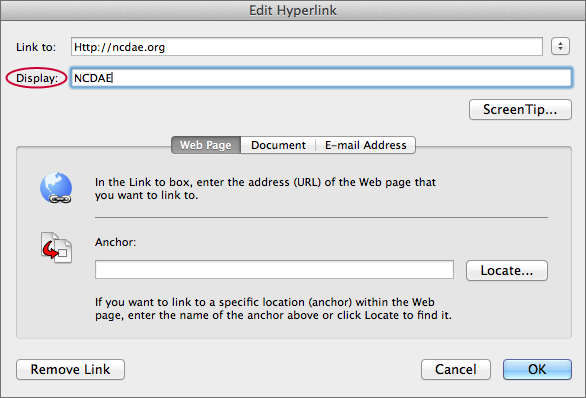
Figure 1. The AutoFormat As You Type dialog.
Use the Office offline installer to install Office 2016 or Office 2013 if you don't have an active Internet connection or you're having problems with slow speed or unreliable connections. Uninstall Office for Mac. Download the Office 2016 Deployment Tool from the Microsoft Download Center. 
Note: You may wonder what type of text Word will automatically recognize as something that should be a hyperlink. Word will “recognize” as an email address any “word” that contains the @ symbol, even if the “email address” is an expletive such as !@#$%. It will recognize text as an URL if it begins with “www.” or “http://” I have not been able to determine what it recognizes as a file path, though the presence of a colon and slashes might be assumed.
Insert Hyperlink button
On the Standard toolbar in Word 2003 and earlier there is an Insert Hyperlink button (see Figure 2). In Word 2007 and above, this button is in the Links group on the Insert tab of the Ribbon. If you select (or even just click in) a recognizable email address, URL, or file path and click this button, Word will convert the text to a hyperlink. The keyboard shortcut for this command is Ctrl+K. In Word 2007 and above, this shortcut opens theInsert Hyperlink dialog (see below).
Figure 2. The Insert Hyperlink button
Insert Hyperlink dialog
The Insert Hyperlink dialog, however, gives you the most control over the hyperlinks you insert. There are at least two (and often three) parts to every hyperlink: (1) the display text, (2) the underlying URL, email address, or file path, and (3) the ScreenTip (see Figure 3).
Figure 3. The Edit Hyperlink dialog (identical to Insert Hyperlink)
When you create a hyperlink using either of the methods described above , the display text and underlying link are the same, and there is no ScreenTip. To access these features you must either use Insert Hyperlink or Ctrl+K to open the Insert Hyperlink dialog or right-click on an existing hyperlink and choose Edit Hyperlink to open an identical dialog. If you have text selected when you press Ctrl+K or choose Insert Hyperlink, it will be placed in the “Text to display” box. If you use Edit Hyperlink, the existing hyperlink becomes the default “Text to display,” but of course you can change it.
In Word 2007 and above the Hyperlink command, which opens the Insert Hyperlink dialog, is on the Insert tab; the Edit Hyperlink dialog may be accessed by right-clicking on an existing hyperlink as in previous versions.
The hyperlink created in Figure 3 will be displayed on screen as shown in Figure 4.
Figure 4. Hyperlink in document
The underlying field code for the hyperlink can be seen by pressing Alt+F9 or checking the box for “Field codes” on the View tab of Tools Options. It is shown in Figure 5.
Figure 5. HYPERLINK field code
Note that the “display text” does not have to be text. You can use an icon or picture as a hyperlink. Just select the picture in your document and open the Insert Hyperlink dialog. The “Text to display” box will be dimmed (grayed out) and will display <<Selection in document>>.
Word’s Help topic “Create a hyperlink” includes detailed instructions for creating hyperlinks to a variety of targets using this dialog.
When hyperlinks go wrong
Microsoft Word Hyperlink Pdf Mac Download
An understanding of the above issues should go a long way to helping you figure out what’s happening when hyperlinks don’t look or behave as you think they ought to.
Hyperlinks don’t look like hyperlinks
Although you may be used to seeing hyperlinks as blue and underlined, they can be formatted in many different ways and may even look like ordinary text. For example, TOC entries and cross-references, even when they are hyperlinks, do not have the distinctive hyperlink formatting.
Jan 25, 2019 Whether you are a blogger, writer, journalist, columnist, student, or a project manager working on documentation, it’s as handy as you want it to be. Unmistakably Office, designed for Mac MacBook Pro Touch Bar is fully supported by Microsoft Word. Get the most relevant Word features right at your fingertips. Can macs open microsoft word. Open Microsoft Office documents on your Mac You can use the Pages, Numbers, and Keynote apps to open documents you created with Microsoft Office. Use Pages to open Microsoft Word documents. There are times when users are not able to understand how to open Microsoft Word on Mac. Needless to say, before you proceed, make sure that MS Word is already installed on your Mac and is running smoothly. You can just look for the Word application on your Mac and launch it without any trouble. Mar 19, 2020 Suddenly Microsoft word will not open on my Macbook Pro. All over Microsoft apps will open without problems, but when I click to open word it just bounces as if its trying to open for a few minutes then stops bouncing. If I right click it says 'Application not responding' and will only allow me to force quit. I have updated my Mac, my Microsoft apps are all up to date and I have restarted my.
The Hyperlink character style in Word 2003 and earlier is defined as “Default Paragraph Font + Underline, Font color: Blue” (see Figure 6). Like any other style in Word, this style can be modified, so the hyperlinks in your document could be, for example, red and not underlined (as on this Web page)—or any other formatting you desire. In fact, in Word 2007 and above, the formatting of the Hyperlink style varies depending on the theme applied. For example, in the Aspect theme, the Hyperlink color is a shade of green (RGB 107,157,37). Note that there is a separate Followed Hyperlink style (defined as “Default Paragraph Font + Underline, Font color: Violet”) that is automatically applied when a hyperlink has been followed; if you want your hyperlinks always to look the same, you will need to modify this style as well.
Figure 6. The Hyperlink character style
If you expect hyperlinks to be blue and underlined and they’re not, there are several possibilities:
They’re not active hyperlinks (see next section).
The Hyperlink style has not been applied.
The Hyperlink style has been modified.
The Followed Hyperlink style is in effect instead.
The hyperlinks are cross-references or TOC entries.
If hyperlinks look like Figure 5 above, then you are seeing the field code instead of the field result. You can select or click in the field code and press Shift+F9 to toggle the display of that single field or press Alt+F9 to toggle all the fields in the document or clear the “Field codes” check box on the View tab of Tools Options.
Hyperlinks aren’t clickable
If a hyperlink, despite looking like a hyperlink, doesn’t do anything when you click on it, there are three possible causes:
It isn’t really a hyperlink. It may just be plain text with the Hyperlink character style applied. Press Alt+F9 to see if there is an underlying HYPERLINK field code.
You are viewing the field code (see Figure 5) instead of the field result.
You are using a version that by default requires you to press Ctrl while clicking in order to follow the link. If you have ScreenTips enabled, you should see a ScreenTip such as the one shown in Figure 7.
Figure 7. Hyperlink ScreenTip as seen in Word 2002 or later
To turn on the display of ScreenTips:
Word 2003 and earlier: Tools Options View: Show: ScreenTips.
Word 2007: Office Button Word Options Display: Show document tooltips on hover.
Word 2010 and above: File Options Display: Show document tooltips on hover.
This safety feature, introduced in Word 2002, was intended to make it easier to edit the display text of hyperlinks. If you prefer to revert to the behavior of previous versions, clear the check box for “Use CTRL + Click to follow hyperlink” at the following location:
Word 2003 and earlier: Tools Options Edit
Word 2007: Office Button Word Options Advanced: Editing options
Word 2010 and above: File Options Advanced: Editing options
The link goes to the wrong place
This usually means that the display text of the hyperlink doesn’t agree with the underlying link. As noted above, current Word versions make it easier to edit the display text of a hyperlink; you can do this directly in the document because, by default, clicking on or in the hyperlink doesn’t send you haring off across the Internet to the referenced URL.
But changing the display text doesn’t actually change the hyperlink, just the text that is displayed. This may be obvious to you if the display text is different from the underlying URL, but if they are the same, it may not occur to you. In order to change the target of the link, you need to change the HYPERLINK field code as well. You can do this either through the Edit Hyperlink dialog or directly.
To give you a real-world example, some time ago mvps.org moved to a new server, and all the site addresses were changed. So a page at the Word MVPs’ Web site that used to be, say, http://mvps.org/word/FAQs/AppErrors/ProbsOpeningWord.htm became http://word.mvps.org/FAQs/AppErrors/ProbsOpeningWord.htm. In the reference document that I use to keep track of frequently referenced articles at this Web site, I had to change all the links. Using Find and Replace, I could replace “mvps.org/word” with “word.mvps.org” in each link, and this worked great—for the display text. But when I hovered over the links, the ScreenTips showed that the underlying hyperlinks were unchanged. In order to change them, I had to display the field codes (using Alt+F9) and run the Replace operation again.
To my surprise, even this was not effective. The ScreenTips still showed the old URLs. What? Aha! I hadn’t updated the fields. By selecting all the fields (Ctrl+A to select the entire document) and pressing F9 to update the fields, I solved the problem.
The bottom line is that if you want to change the target of a hyperlink, you must do it in three steps:
Change the display text (if it is the same as the target).
Change the underlying HYPERLINK field code.
Update the field.
Paul DeBrino has reminded me of another issue that causes Microsoft Word to change and perhaps break your hyperlinks, by altering the link from an absolute to relative path or vice versa, when saving your Word document.
After creating a hyperlink in Word, hovering over that hyperlink displays your intended path. However, once you click Save, Word may change the link to a path that is relative to the Word document’s location, a virtual path that begins with …/
To prevent Word from changing your hyperlinks, take the following steps:

Click Tools Options (in Word 2007, Office Button Word Options; in Word 2010/2013, File Options).
On the General tab, click the Web Options button (in Word 2007 and above, this button is at the very bottom of the Advanced section of Word Options).
In the Web Options window, click the Files tab.
Clear the check box for “Update links on save.”
Click OK to save your preferences.
This article copyright © 2006, 2008, 2011, 2013 by Suzanne S. Barnhill, with thanks to Daiya Mitchell for her helpful comments.
mcafeeWant to Convert word to PDF with hyperlinks. You can use many methods to convert Word document to PDF files. But many methods will not preserve hyperlinks. After converting word to PDF, you will see hyperlink but you can not click on that.
I have faced this situation when I converted my EBook from Word document to PDF file using Wondershare PDF element which is premium PDF editor software. It is the cheap and best alternative to the Adobe Acrobat reader. Even if I used premium software to convert my word document to PDF file, it did not preserve hyperlinks. I have also tried another premium PDF editor software Able2Extract with no luck.
But finally, I have discovered two free methods to Convert word to PDF with hyperlinks. Adobe Acrobat reader Pro will convert doc to PDF with hyperlinks. If you don’t want to spend money, the read this article.
How to Convert word to PDF with hyperlinks
Usually, you can convert word document to PDF from MS Word itself. Open Word document in MS Word. Go to Print -> SelectMicrosoft Print to PDF option at the printer Name -> Select OK. It will convert your Word document into PDF. But it will not preserve your word document hyperlinks in PDF file.
You will see hyperlinks, but they are not clickable. Now let us see how to convert word doc to PDF with clickable hyperlinks.
1.Using MS word Other formats option
Open your document with MS word.
Go to File -> Save As -> Other Formats.
Click drop down symbol at Save As Type. Select PDF(.pdf) -> select Save.
It will save your Word document as PDF file by preserving hyperlinks.
- Related: Awesome trick to save web page as PDF from any browser
2.Using Foxit reader
Microsoft Word Hyperlink Pdf Mac Software
Download Foxit reader which is a free PDF reader with some PDF editing features. While installing it, make sure that you have selected word and Excel plugins.
Open your word document with MS word.
Select Foxit Reader PDF tab at the top. Make sure that Preserve Document Properties option is selected. Click Create PDF.
It will create your PDF file with the working links.
- You May Also Like: 7 Best PDF editor software for Mac and Windows
Conclusion:
I think the first method gives you quick solution without installing any other software. If the first method fails, then you can use the second method. If you need complete PDF editing features, it is better to go with Adobe Acrobat reader Pro. But it comes with the monthly subscription plans. So I recommend you Wondershare PDF element. It comes with the lifetime license. It may not compete with the adobe reader, but it is the best alternative to adobe reader.
Microsoft Word Hyperlink To Folder
If you like this article about How to Convert word to PDF with hyperlinks, please share it with your friends. Please follow whatvwant on Facebook and Twitter.